A (Draft) Syllabus
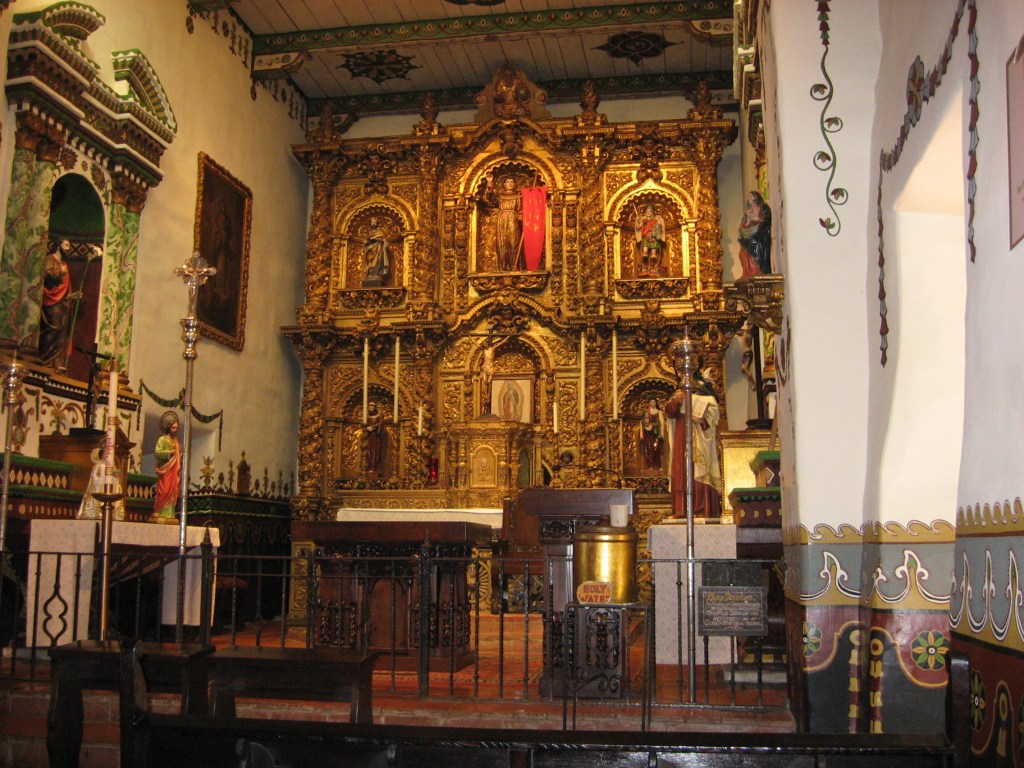
When I was a teenager, I got an opportunity to take a school trip to Italy for a week. One of the places we visited was the Vatican where we finished a museum tour by walking into the Sistine Chapel.
I can’t tell you how amazing it was to walk into that room and look at the ceiling painted by Michelangelo – the Creation of Man, Adam and Eve being cast out of the Garden of Eden. All the Apostles and all of the Prophets.
At the end of the room, I turned around after marveling at the ceiling to see something I thought even more amazing – The Last Judgment also by Michelangelo – Christ was descending in all of his glory at the end of time.
As I considered doing another study for our Bible Study group of the Revelation of John, I realized that the End Time and the Judgment – those “eschatological” events – were planned by God since at least the commission of the first sin by Adam and Eve in the Garden of Eden. In fact, some type of end time event and judgment were probably required since at least the rebellion of Lucifer and the 1/3 of the angels who followed him.
As such, all throughout the Bible are references to the end time. Also, all of human history points to an end. To fully understand these events, it’s important to look at all the prophecies recorded in Revelation in light of all the other End Time prophecies recorded in the Bible (such as the prophecies of the coming “Day of the Lord”) as well as understanding biblical history and how these also point to what will happen in the end time.
We will also look at other historical events and how these relate to the prophecies we will study. Remember that Jesus prophecies about an “abomination that brings desolation” in the future which mirrors a time during the between the Old and New Testament period when a Greek ruler fulfilled that role before the Hasmonean Dynasty in Judah was established.
That’s why this study was created. This website will be a companion to a Sunday School study that will be held with my Sunday School Class.
Here’s a draft syllabus to get us started:
- Genesis 3 – The Fall of Mankind and the need for a Savior
- Genesis 6 – Noah and the Ark – Judgment on the World
- Genesis 11 – The Tower of Babel – Scattering of the Nations
- The Destruction of Sodom and Gomorrah
- I Samuel 8 – Israel gets a human king
- References to the “Day of the Lord” or the “Day of Wrath”
- Jonah and the prophecy against Ninevah
- The Exile of Israel and Judah – the departing of the Spirit from the Temple
- Daniel in exile and the prophecies of Daniel
- Ezra and the building of the second temple
- The Minor Prophets
- Ezekiel and the coming temple
- The Time between the Testaments
- The Gospel of Jesus
- Matthew 24-25 – Jesus prophecies of the end time
- 1 Corinthians 15:51 – Prophecy of the rapture
- Peter discusses the final days
- Historical Events after the time of the Bible
- Revelation of John
Lesson 1: Israel wants a king (1 Samuel 8)

Context of the study: Samuel had been judge in Israel and had led Israel successfully against the Philistines. (We’ll talk about “Ebenezer” in a future study – from 1 Samuel 7).
In 1 Samuel 8, Samuel installs his sons as judges to follow him after Samuel “retires.” But, like Eli’s sons (the former High Priests sons) who were installed as priests for Israel, Samuel’s sons were also more interested in what they could gain from their position than in doing the right thing.
Unlike the situation with Eli’s sons where God passed judgement on Eli and his sons for their poor behavior, the nation of Israel did not turn to God but came to Samuel and asked for a king “as all the other nations have.” (1 Samuel 8:5)
Samuel was unhappy about their desire and prayed to the LORD about it. The LORD responded that the people were rejecting God as Israel’s king and not the leader, Samuel. All the other nations had a human king to rule them where Israel, as God’s chosen people, had God as king. (God had chosen Israel from Abraham, Isaac and Jacob.) The LORD told Samuel to listen to the people but warn them about what the (human) king would do.
“This is what the king who will reign over you will claim as his rights: He will take your sons and make them serve with his chariots and horses, and they will run in front of his chariots. 12 Some he will assign to be commanders of thousands and commanders of fifties, and others to plow his ground and reap his harvest, and still others to make weapons of war and equipment for his chariots. 13 He will take your daughters to be perfumers and cooks and bakers. 14 He will take the best of your fields and vineyards and olive groves and give them to his attendants. 15 He will take a tenth of your grain and of your vintage and give it to his officials and attendants. 16 Your male and female servants and the best of your cattle[c] and donkeys he will take for his own use. 17 He will take a tenth of your flocks, and you yourselves will become his slaves.18 When that day comes, you will cry out for relief from the king you have chosen, but the Lord will not answer you in that day.” (1 Samuel 11 – 18 NIV from biblegateway.com)
The result is that the people reject the warning and still want a king.
Now, let’s look at a modern example. At the Treaty of Versailles which closed out World War 1, Germany was made to pay punitive reparations. The crushing reparations and the government spending by the Wehrmacht Republic drove the economy to hyper-inflation. The joke was that a woman would take a wheelbarrow of Marks (German money) in order to buy bread. She would leave the wheelbarrow outside and go into the store. When she went to get the money to buy the bread, she would find the money still there but the wheelbarrow had been stolen.
Germany suffered greatly and was in crisis. Enter Adolph Hitler – the man starts amassing power in Germany especially with his call to nationalism and blaming the allied nations (and the Jews) for Germany’s economic woes. He gets elected as Chancellor of Germany. When President Hindenburg dies, Hitler consolidates his power and becomes the Fuhrer (Leader).
After that, German freedoms begin to be curtailed “for the good of the state.” German rule becomes more authoritarian and ultimately leads to World War II.
In Revelation 13, a beast is described which is the Anti-Christ. “It was given power to wage war against God’s holy people and to conquer them. And it was given authority over every tribe, people, language and nation.” (Revelation 13:7)
How will such a being come to such utter power?
First, a crisis of world-wide proportions will occur. Prior to the occurrence of the beast in Revelation 13, a great tribulation is described and people will be looking for a leader (but not God) to lead them out of the tribulation.
In 1 Samuel 8, Samuel’s sons were poor leaders. In Germany, it was the collapse of the economy. We are already living in the time of Covid-19 which has been a worldwide pandemic where leadership has curtailed certain freedoms in order to combat the spread of the disease. (This is just an example, remember we don’t have a world-wide leader right now.)
Second, someone will be given authority to lead during a terrible time. The problem is that many of the people will not turn to God for help but will seek someone else to “save” them. I’m sure the German people thought that Hitler was the right man at the time of their terrible crisis. He spoke a lot of things that the Germans liked. But his actions in power showed his true character and led his nation to destruction.
Third, the Anti-Christ/Leader will begin to curtail the freedoms of the people. As long as you go along with his rule, you will (temporarily) do well. Those that go against the rule of the Anti-Christ will be mercilessly treated. Remember that his aim will be to wage war on Christians and those who don’t recognize his authority. Ultimately, the Anti-Christ will expect the “worship” which only God is due.
As Revelation 13:10 says “If anyone is to go into captivity, into captivity they will go. If anyone is to go to be killed by the sword, with the sword they will be killed.” (NIV – see also Jeremiah 15:2)
Remember, Samuel warned the people about the human king that they desired (instead of God). Israel had a number of kings who were quite bad. They rejected Samuel’s word (and God) and suffered the consequences. God also promised Israel “When the day comes, you will cry out for relief from the king you have chosen, but the Lord will not answer you in that day.” (1 Samuel 8:18 NIV) The world will be in the same predicament at the time of the Anti-Christ.
“Whoever has ears, let them hear.” (Revelation 13:9 NIV)
Lesson 2: The First Advent (Luke 2:22 – 38)

Context of the Study: Joseph and Mary had traveled to Bethlehem because of the Census of Caesar. Forty days after Jesus was born, he was presented at the temple (because he was a first born son) and Mary offered sacrifices as prescribed by the law for her purification.
In order to properly understand the second advent of Jesus (the “glorious day of the Lord.” Acts 2:20) we must first understand the first advent of Jesus, where he was born. This one scene of the presentation at the temple is significant.
Simeon was described as “righteous and devout.” He was waiting for the “consolation of Israel” (the prophesied Messiah). Because he was actively looking forward to the coming Messiah, God had revealed to Simeon that he would see the Messiah before he died.
Let’s take a look at the culture in which Jesus had been born. The Jews were basically separated into four main groups.
The Pharisees (and teachers of the Law) had developed a set of “traditions” which had externalized the law. The Law stated in Deuteronomy 5:14 “The seventh day is a sabbath to the Lord your God. On it you shall not do any work.” (NIV) However, the Pharisees further codified the Law – “you can only take so many steps before it is considered work on the sabbath,” etc. Trying to follow the rules was an unnecessary burden.
The Sadducees were typically in charge because they went along with the oppressive Romans. Rome brought a lot of advantages to civilization, but they ruled with an iron fist and taxed the people mercilessly.
The Zealots were a group that was against the Romans. They were typically more violent and ruthless in their pursuit of rebellion against Rome.
The Essenes thought the whole of society was corrupt and abandoned the culture (removed themselves to other places) as unworthy of interaction or engagement. Think of the Essenes as Jonah sitting on the hill above Ninevah waiting for God to bring His wrath. Although, to Jonah’s credit, he FINALLY did go to Ninevah to deliver God’s warning. (See the Book of Jonah.)
On the whole, none of these groups were really devoted to God. (Although there individuals in the groups who were probably devoted to God (For example, Nicodemus.) They may have thought that they were (just as some people today believe they are devoted to God). But their “fruit” betrays them. (Remember at judgment, “Many will say to me on that day, ‘Lord, Lord, did we not prophesy in your name and in your name drive out demons and in your name perform many miracles?’ Then I will tell them plainly, ‘I never knew you. Away from me, you evildoers!’” (Matthew 7:22 – 23 NIV))
From an end time perspective, it will feel like that Christians are “alone” and in the very small minority. Just as in Elijah’s time when he complained to God “I am the only one left,” God responds that “I have 7,000 in Israel who have not bent the knee to Baal (false god).” (1 Kings 19) Simeon was devoted to God and a remnant will always be devoted to God even when it seems “I am the only one left.”
Also, Simeon was prompted by the Holy Spirit to go to the temple the day that Jesus is presented. Simeon, through the actions of the Holy Spirit, recognizes Jesus as the Messiah and praises God. Isn’t it interesting that the priest to whom Jesus was presented did not have that same epiphany? If he had, I’m sure that it would have been recorded.
Simeon’s song (known as the “Nuns Dimittis” in Latin says:
“Sovereign Lord, as you have promised,
you may now dismiss your servant in peace.
For my eyes have seen your salvation,
which you have prepared in the sight of all nations:
a light for revelation to the Gentiles,
and the glory of your people Israel.” (Luke 2:29 – 32 NIV from biblegateway.com)
So the song is very straightforward. First, Simeon knows that he can now die, but he is not fearful of death because he knows it is a gateway to eternity with God. Second, Jesus is the salvation of people from their sins (and not the Romans which were the oppressive civilian authority of that day). Finally, Jesus salvation was for the whole world and not just for the Jews.
Then, Simeon makes a prophecy. “This child is destined to cause the falling and rising of many in Israel, and to be a sign that will be spoken against, so that the thoughts of many hearts will be revealed. And a sword will pierce your own soul too.” (Luke 2:34 – 35 NIV)
Jesus is the “measuring stick” to which all will be measured (especially Israel first and then the rest of the world). “Did we accept his sacrifice and his lordship or did we not?” No other question is relevant. “Good works? Believe in God other than Jesus? Wealth? Fame?” All of these other questions are irrelevant to salvation and eternity with God.
Jesus to be “spoken against” – isn’t that already happening today? Bring up God and you are tolerated – bring up Jesus and you are NOT. We live in a Post-modern society which states that states that objective statements cannot exists. “Objective truth does not exist – it’s only truth if you think it is true.” (Guess what, that’s an objective statement!) “I believe that I can fly” only works if you can counteract the law of gravity.
Because of Jesus, “hearts will be revealed.” As time goes on, it will become clearer and clearer on which side of the fence people will stand. Jesus talks about two parables – the sheep and the goats (Matthew 25:31 – 46) and the enemy who sows a field of wheat with weeds. (Matthew 13:24 – 30) The separation of peoples will be just as clear – those who are “for Jesus” and those who are “against Jesus.”
So, what conclusions can we draw from this temple scene that apply to an end-time scenario? First, a remnant of people devoted to God will definitely exist until the end time is completed. This is evidenced all throughout the Bible.
Second, we should be watching for the coming of Jesus return. It’s easy to get caught up in the actions of the every day and think “Tomorrow, I will do this or that.” But we are not promised “tomorrow!” Jesus could come at any time “like a thief in the night” – completely unexpected. (Matthew 24:42 – 44 – see also 1 Thessalonians 5) Simeon’s waiting for the Messiah was rewarded – He got to see the Messiah. (I heard a preacher say quite recently that “We are living in the end times. They began when Jesus was first born.” (Granted, the end times are 2000 years old. But, this is still an important point.)
Third, Simeon was “filled with the Holy Spirit.” As Christians, we are filled with the Holy Spirit; however, our Christianity is not a religion per se – it is an ongoing relationship with the person, Jesus Christ. As such, we should always nurture the relationship that we have with God by spending time with him. This relationship will allow us to hear what God wants us to know.
Finally, until Jesus comes again, we should “tell others the good news about Jesus.” What did Anna do? “She gave thanks to God and spoke about the child to all who were looking forward to the redemption of Jerusalem.” (Luke 2: 38 NIV)
Lesson 3: The Fall of Mankind

In the beginning God created the heavens and the earth.” Genesis 1:1
In Genesis 3, the serpent tempted Eve with the fruit from the Tree of the Knowledge of Good and Evil and Eve in turn gave the fruit to Adam. (There is some discussion of whether Adam was present for the tempting of Eve by the Serpent.)
Fast forward to the confrontation with God. Adam and Eve had sinned against God – the first sin. In one moment, Adam and Eve “spiritually died” and became subject to physical death. As God came into the garden, they hid themselves from God and had covered their nakedness with fig leaves.
You can find a lot of theology related to this portion of the fall of man which I’m intentionally going to skip to get to the part that I think is most relevant to end time prophecy – and that has to do with the curse and prophecy uttered by God against the serpent.
In Genesis 3:14 – 15, God curses the serpent/Satan and gives a prophecy about the “enmity” between Satan and Eve.
“Because you have done this,
Cursed are you above all livestock
and all wild animals!
You will crawl on your belly
and you will eat dust
all the days of your life.
And I will put enmity
between you and the woman,
and between your offspring and hers;
he will crush your head,
and you will strike his heel.” (Genesis 3:14 – 15 NIV from bible gateway.com)
First, the serpent becomes the one animal cursed “above all livestock and wild animals.” I remember when I was at a boys camp (I was probably seven or eight). We went on a nature hike. We were in a line following the camp counselors when the boy immediately behind me yells at the top of his lungs, “SNAKE!” Of course, we were all scared and jumped away from the place that I had JUST CROSSED OVER!
One of the camp counselors (with proper training, of course) grabbled the snake immediately behind the haed and held a snake that was about 3 feet long. He showed us that it was a diamond back rattle snake and that it was EXTREMELY POISONOUS. Yep, I was the one that had just walked over where that snake lay before it had been found.
If you want an idea of what a seven/eight year old felt being the last one to cross over that snake’s lair, just take a look at the snake pit scene in the updated True Grit movie. (Shudder)
Now, let’s talk about the prophecy – the enmity between the snake and “the woman” and the enmity between “your offspring and hers.” God prophesies that the snake (and his offspring) ‘will strike his heel’ and that her offspring will ‘crush your head.’
The problem is that the most recent NIV translation, being a thought translation (in my mind) is no longer quite accurate. The footnote indicates “offspring” should really be translated as “seed.”
But, physically, as created by God, a woman does not have a “seed,” a MAN has “seed.” So, what “seed” could a woman possess?
For that, we have Luke 1:26 – 38. The angel, Gabriel, comes to the virgin, Mary, and tells her that “the Holy Spirit will overshadow you. So, the Holy one will be called the Son of God.” This is Jesus.
I highly recommend the Passion of the Christ starring Jim Caviezel and directed by Mel Gibson. (This is not a movie that should be watched by a child.) As Jesus is in the Garden of Gethsemane, he prays to God that the “cup pass from me” (which means, “if there is any other way to effect salvation without death on the cross and carrying the weight of all mankind’s sin”) but finally gives into God’s will when he utters, “Not my will but thine be done.”
Then a snake comes into view under his feet and Jesus raises his heel and brings it down forcefully to crush the snake’s head. This is a true foreshadowing to when Jesus dies on the cross (when the snake has struck his heel figuratively to death) but through that death, Jesus effects salvation to mankind. Three days later, Jesus has defeated not just sin but also death (the consequence of sin).
Fast forward to the end time. When Jesus comes again, it’s when the Christian remnant is facing annihilation at Armageddon by the evil forces of this world. Jesus, in all his glory and with all the “heavenly host” (army of the angels) appears. The “Beast” and “False Prophet” are captured and thrown into the lake of fire and the evil that are with them are all killed Jesus own word (the symbolic “sword of the rider”).
There’s a great old hymn, A Mighty Fortress is Our God, by Martin Luther with this verse:
“And though this world with devils filled,
Should threaten to undo us,
We will not fear because God has willed
His truth to triumph through us.
The prince of darkness grim,
We tremble not for him,
His rage we can endure,
For lo his doom is sure;
One little word shall fell him.”
Glory to God.
What is this site?
I created this site to discuss end time prophecy. Out of all the prophecies in the Bible, the end time prophecies are the ones that have yet to happen. Most of these were recorded in the book of Revelation; however, several other books in both the Old and New Testament speak about the end times.…
The Context of the Study
“Behold I stand at the door and knock. . . (Rev. 3:20) ” The Context or My Testimony When I was a boy of seven years, I went to my Mother and my Father and stated with certainty, “I want to be a Christian.” I had grown up in the church for as long as…
My Testimony
When I was seven, I became a Christian. The following Sunday, I was baptized. Life was perfect ever since. Wouldn’t that be nice? Of course, you know that life is not perfect and it hasn’t been for me either. I won’t bore you with everything that happened. I grew up in the church. I went…
Get new content delivered directly to your inbox.
 End Time Prophecy Study