Lesson 13: The Offer of Life or Death

Moses led the Israelite nation to the border of the promised land after they had wandered in the desert for forty years as punishment for rebelling against God. In his last sermons to the Israelite nation, Moses spends time in chapters 28 and 29 of Deuteronomy going over the blessings of God and the curses of God. The blessings of God would continue as long as the nation stayed obedient to God. Otherwise, the curses of God would take effect when the nation became disobedient to God.
Moses also prophesied at some point that the curses of God would happen because the Israelite nation eventually would turn away from God, but that God would rescue a remnant who turned back to God.
In Deuteronomy 30, Moses summarizes the true meaning of the discussion of blessings and cursing, “See, I set before you today life and prosperity, death and destruction. For I command you today to love the Lord your God, to walk in obedience to him, and to keep his commands, decrees and laws; then you will live and increase, and the Lord your God will bless you in the land you are entering to possess.
But if your heart turns away and you are not obedient, and if you are drawn away to bow down to other gods and worship them, I declare to you this day that you will certainly be destroyed. You will not live long in the land you are crossing the Jordan to enter and possess.” (Deuteronomy 30:15 – 18)
This is the type of choice that every generation is given – to either worship the Lord our God and gain life or to turn away from Him and suffer death.
This reminds me of another encounter, between Jesus and Pilate as recorded in scripture (John 18 – 19) where the offer of life or death seems to be reversed.
Jesus has been arrested. He was already “tried” before the High Priest and Jesus was condemned to death. Only one problem existed, death sentences could only be enacted by the Roman authority and not by the High Priest and the Sanhedrin.
So, a delegation took Jesus before Pontius Pilate who was the Roman Governor.
At first, Pilate is incredulous. “Why have you brought him? Try him yourself.” The charge that the delegation brings is that Jesus claimed to be King of the Jews which would have political overtones for Pilate as a hint of rebellion against the lawful, Roman authority.
So, Pilate asks Jesus directly, “Are you the King of the Jews?” The other gospels all record Jesus as saying, “You have said so.” (Matthew, Mark, and Luke) but in John’s gospel, Jesus answers by asking, “Is that your own idea or did others talk to you about me?”
The conversation continues, “’Am I a Jew?’ Pilate replied. ‘Your own people and chief priests handed you over to me. What is it you have done?’
Jesus said, ‘My kingdom is not of this world. If it were, my servants would fight to prevent my arrest by the Jewish leaders. But now my kingdom is from another place.’
‘You are a king, then!’ said Pilate.
Jesus answered, ‘You say that I am a king. In fact, the reason I was born and came into the world is to testify to the truth. Everyone on the side of truth listens to me.’
‘What is truth?’ retorted Pilate.” (John 18:34 – 38)
Pilate returns to the delegation and says, “I find no basis for a charge against him.” And he tries to find a simple solution to let Jesus go, citing the custom of releasing a prisoner because of the holiday (Feast of Unleavened Bread and Passover) and suggests, “The King of the Jews” as the appropriate prisoner to release.
But the delegation really wants Jesus to die. “Give us Barabbas!” the crowd exclaims.
Then in John 19, Pilate tries another tactic. He has Jesus flogged and humiliated. Then he comes back to the delegation and says, “I find no basis for a charge against this man. Here is the man!”
And the crowd screams, “Crucify him!”
Pilate retorts, “You crucify him.”
The crowd shouts, “We don’t have the authority, but he deserves to die because he claimed to be the Son of God!”
Pilate goes back to Jesus and has his final conversation with him, “‘Where do you come from?’ he asked Jesus, but Jesus gave him no answer. ‘Do you refuse to speak to me?’ Pilate said. ‘Don’t you realize I have power either to free you or to crucify you?‘
Jesus answered, ‘You would have no power over me if it were not given to you from above. Therefore the one who handed me over to you is guilty of a greater sin.’ (John 19:9 – 11)
In Deuteronomy, we see that an offer of life is given to the Israelites. In John, we see that Jesus, the Son of God, has his very life placed into the hands of Pilate who could free him and let him live or kill him by crucifixion.
Of course we know that Pilate eventually gives into the crowd and sends Jesus to death. Or as recorded by C. S. Lewis in the Screwtape Letters, the devilish character, Wormwood writes to his devilish nephew, Screwtape, “Pilate was merciful until it became risky.” (The Screwtape Letters, letter XXIX by C. S. Lewis)
In many ways, I have been thinking how each generation is presented with this offer of life or death from God – as if a great prophet says, “Follow God and live or turn from God and die!” But, I’ve come to the conclusion that the encounter is more like the one between Pilate and Jesus – a much more intimate discussion – an individual and personal decision about a particular person (Jesus) which has life and death ramifications.
“Who is Jesus?” That was the crux of Pilate’s question. “King of the Jews” didn’t phase him. “Testifier of the Truth” didn’t phase him. But, when he heard “Son of God,” this was Pilate’s initial response – “When Pilate heard this, he was even more afraid.” (John 19:8)
God granted Pilate the authority to put His Son to death to fulfill a great purpose of God. No-one else will ever have that authority. But, each of us will be confronted with the question, “Who is Jesus?” Our response can be like Pilate’s initial one where we “can be afraid of the answer.” Or, like Pilate’s ultimate response ours can be “washing our hands of the matter and putting it out of our head.” Or, like many we can reject the true answer in favor of a lie.
Or, we can acknowledge the truth of Jesus and accept His great gift of salvation to be reconciled to God because of Jesus death on the cross and resurrection from the grave.
The ultimate question to answer is “Who is Jesus?” will become even more crystal clear during the End Time. All I have to say at this point is “beware the mark of the beast!” (which we’ll cover in depth as we get to the book of Revelation).
Either way, each of us will ultimately be making a personal choice about Jesus which will also be a choice between “Life” or “Death.”
Lesson 14: Israel forgets God
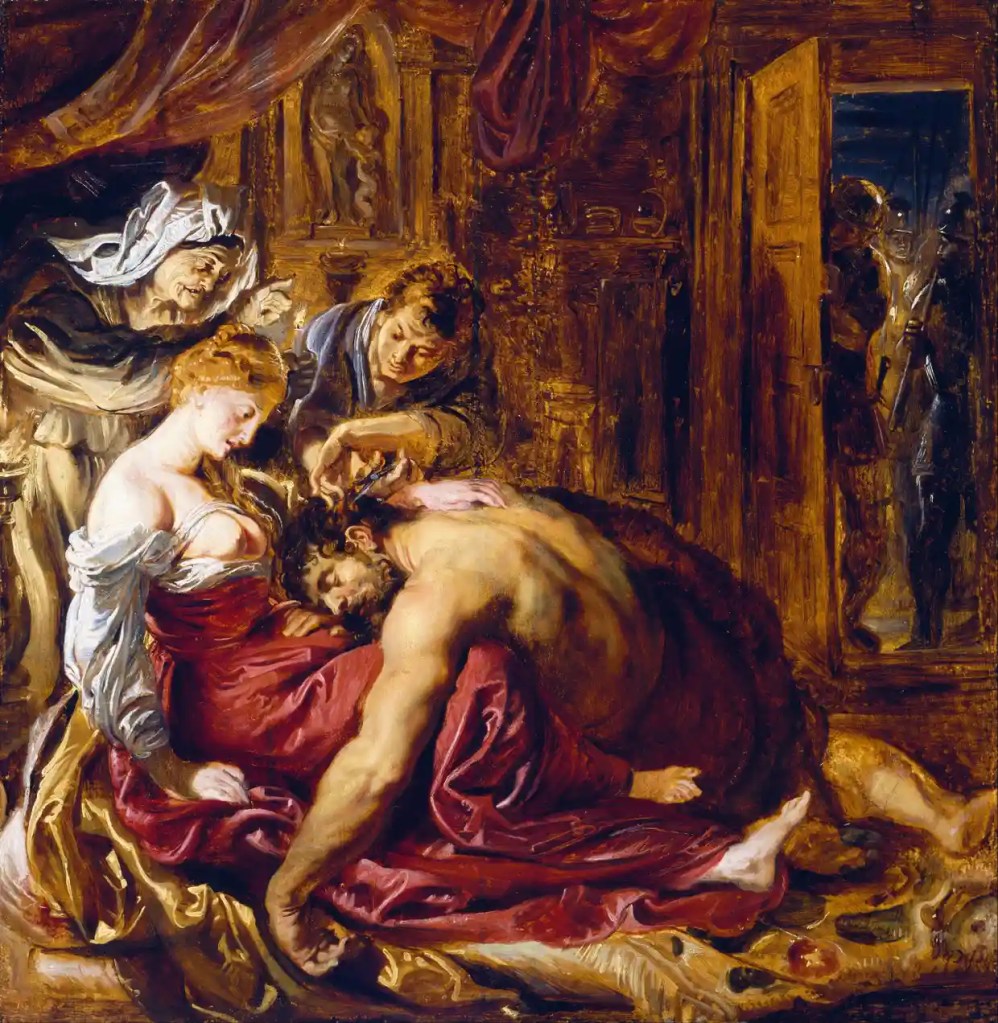
What is the Holocaust? I was not born when this event happened in history, but I know what it is and what happened during it. I recently watched a video by PragerU from January, 2019 where an employee of PragerU asked the question, “What is the Holocaust?” to several people on the street. The answers were quite shocking – a very limited number of those in the video knew what the Holocaust was or how many people were killed.
The Holocaust is the term for when the Nazis took about six million Jews (and others – but, mostly Jews) to concentration camps, gassed them, and cremated their bodies. Six million people were murdered by the systematic machinations of Nazi Germany.
Why is such a question relevant? A famous quote attributed to George Santayana is, “Those who can’t remember the past are doomed to repeat it.” A theologian crafted the quote to something more like this “We must remember the past or it will become our future.” (Jim Denison, The Denison Forum, April 29, 2022)
I believe that knowing history is important so that we don’t repeat the same mistakes of the past. I also believe that knowing the past helps us to have hope for the future.
The Book of Judges is instructive in this regard. Two key verses in Judges summarize the state of the people of Israel during this time frame. One is, “(a) generation grew up who knew neither the LORD nor what he had done for Israel.” (Joshua 2:10) And “In those days there was no king, everyone did as they saw fit.” (Judges 21:25)
Let’s start discussing the first verse.
Moses had brought the people of Israel to the promised land, recounted the history of the Israelite people, renewed the covenant between Israel and God, turned over the leadership to Joshua, climbed up the mountain to see the promised land, then died, and was buried by God.
Joshua and the generation of the children of Israel brought out of Egypt went into the promised land (when they grew up) and began to secure the land for the Israelites. They spent the rest of that generation’s lives trying to fulfill the instructions of the Lord to take the land from the Canaanites. Toward the end, Joshua called the people together, recounted the history of the Israelite nation, and renewed the covenant once again between the Israelites and God.
Joshua called on the people to choose whom the Israelites would serve – either God or the gods of the Canaanites. He ends with the statement, “. . . as for me and my household, we will serve the LORD.” (Joshua 24:15) The people of Israel also affirmed that they chose to follow God.
Then we begin to see what happens to Israel after the time of Joshua in the Book of Judges. Beginning in Judges 2:6, the Bible records that Joshua died. Then the elders who had served with Joshua also died. Then in Joshua 2:10, this key verse is recorded, “After that whole generation had been gathered to their ancestors, another generation grew up who knew neither the LORD nor what he had done for Israel.”
Wait. What?
First, how is it that a generation did not know what the LORD had done? Part of the law that was given included a history of what the LORD had done for their “grandfathers, grandmothers, fathers, and mothers. God had also prescribed “Feasts” throughout the year – one of which was the Feast of Unleavened Bread and the Passover specifically to remember how the LORD had rescued Israel from Egypt. The dedication of the firstborn was given to the Israelites to remember how God had used that final plague (death of the firstborn) against the Egyptians to rescue Israel from Egypt.
Second, how is it that a generation did not know the LORD? Were they not praying to Him, seeking His will in their lives, worshiping Him at the tabernacle, or “Loving the LORD your God with all your heart and with all your soul and with all your strength?” (Deuteronomy 6:5)
Whatever the reason, this “forgetting” or “not knowing” is the beginning of a tale of perpetual woe as Israel turns away from God, gets oppressed, repents to God, and gets delivered as God raises up a “judge” to rescue His people and then repeats the cycle again and again.
Although Judges records the inconsistency of Israel, again and again, it also shows the consistency of God towards His people as he first enacts the curses when they turn away from Him and then rescues His people when they repent.
Why is it necessary to remember and act on our history with God? Paul records it this way, “For everything that was written in the past was written to teach us, so that through the endurance taught in the Scriptures and the encouragement they provide we might have hope.” And that hope is trusting in God, in His mercy and His love.
How can I make this plain? Mankind is lost without God. When we go through troubles (which we all will), it will be better for us to trust in God who has demonstrated his mercy and forbearance in the past. We can live in hope (with God) or in fear (without God).
Finally, consider the End Time. It will be better for the saints, who will endure great persecution if they remember God, His previous kindness, and trust Him, than it will be for the lost who “knew neither the LORD nor what He had done for Israel.” It won’t be enough to “know about” God, because, “You believe that there is one God. Good! Even the demons believe that—and shudder.” (James 2:19)
Lesson 15: “Everyone did as he saw fit.”
In the last lesson, we covered the state of the Israelites considering the verse from Judges 2:10, “After that whole generation had been gathered to their ancestors, another generation grew up who knew neither the LORD nor what he had done for Israel.“
In this lesson, we will discuss the other key verse which summarizes the state of the Israelites as recounted by Judges 21:25, “In those days there was no king, everyone did as they saw fit.“
Judges 17 – 21 is the text we will look at in detail. The episodes that are recounted here are during the time when God raised up Judges to rescue Israel. Judges 17 – 21 recount two major episodes with some similarities between them.
Remember that during this time, the Israelites seem to go through a period of forgetting God, turning away from God to other gods, being oppressed by other peoples (as a punishment from God), repenting of their sins, crying out to God for relief, God raising up a judge to rescue them, and then repeating these actions again and again.
In the first episode as recounted in Judges 17 and 18, a man named Micah admits to stealing from his mother who has already cursed the thief. In trying to avoid the curse, Micah confesses his crime and gives back the silver. In her gratitude, she blesses her son (not to really bless him but to negate the previous curse) and then gives part of the silver to make idols for Micah to put in his house. Specifically, she says, “I solemnly consecrate my silver to the LORD for my son to make an image overlaid with silver. I will give it back to you.” (Judges 17:3)
Now, when you see LORD in all capital letters in the Bible (NIV), it is from the Hebrew word “YHWH” (usually pronounced “Yahweh”). The first time God reveals this name is to Moses when Moses asks, “Whom shall I say sent me?” God responds with “YHWH” which means, “I AM WHO I AM.” This name was so holy to the Israelites that they started calling God “HaShem” (or “The NAME”) in place of “Yahweh” (or “I AM”). (See Exodus 3)
The problem is that the LORD not only revealed this name to Moses but also gave the Law in the desert which the Israelites were to obey. The first commandment is “You shall have no other gods before me.” (Exodus 20:3) And the second commandment related to the first was “You shall not make for yourself an image. . . You shall not bow down to them or worship them. . .” (Exodus 20:4) Micah and his mother are not truly honoring the LORD in mentioining his name and then specifically breaking these two commandments.
What is worse is that after Micah has these installed into his house, he creates an ephod (which was only for the high priest from the line of Aaron) and he installs one of his sons as “priest” of this shrine. At this point, the scripture makes the thematic comment, “In those days Israel had no king; everyone did as they saw fit.” (Judges 17:6)
Next, we see Micah upgrade his “priest” from his son to a Levite who has left Bethlehem (and Judah) and has come to the hill country of Ephraim. Micah then thinks, “Now I know that the LORD will be good to me, since this Levite has become my priest.” (Judges 17:13)
Well, Micah is soon disappointed as the tribe of Danites come to his house and take away his idols and his “priest.” (By the way, “priests” were only to be from the line of Aaron of which this Levite was not.) Poor Micah, he was not strong enough to keep the Danites from taking his “things.”
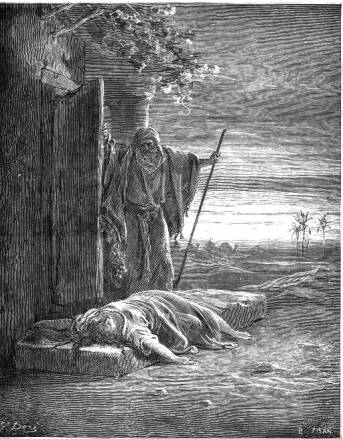
In the second episode, recounted in Judges 19 – 21, a Levite living in a remote area of Ephraim had taken a concubine from Bethlehem. However, she had run away from him and went back to her father’s house. (Could this be the same Levite as mentioned above?) The Levite goes down to her father’s house to bring her back. After several days of delay perpetrated by the father of the concubine, the Levite starts the journey to Ephraim late in the day with the concubine, the donkey, and his servant. They don’t stay in Jerusalem (which was still filled with Jebusites – not Israelites at this time) but stop at night in Gibeah of Benjamin. They decide to sleep in the city square as no one has taken them in.
A man coming in from work sees them in the square and says they can stay at his house. The Levite refuses until the man further encourages him. So, they all go to the man’s house. Later, the wicked men of the city surround the house and demand the host surrender the Levite so that “we can have sex with him.” (Judges 19:22)
This sounds like a previous episode in scripture regarding Sodom and Gomorrah. Instead of the immoral Canaanites surrounding Lot’s house demanding to have sex with the messengers of God, we now have men from one of the twelve tribes of Israel, Benjamin, wanting to perpetuate their sexual immorality. (Part of the reason God told Israel to wipe out the Canaanites was because of the stench of their sins, and here were the wicked men of Benjamin with their stinking offense.)
Just as Lot offered his daughters, the host offers his virgin daughter and the concubine of the Levite. The Levite sends his concubine out to the men who rape and abuse her, then let her go. At daybreak, she makes her way to the threshold of the house and collapses. (The Levite did a terrible thing by sending out the concubine because of his selfishness – make no mistake.)
The Levite finds her in the morning, straps her dead body to his donkey and then heads home. Then, he cuts her body up in twelve pieces and sends one piece to each tribe in Israel to come against the Benjamites in Gibeah for punishment.
What happens next is that the Israelites come together to punish the people of Gibeah. When they required the tribe of Benjamin to take part in the punishment of this one town, the whole tribe of Benjamin decide to fight with their brothers of Gibeah against the rest of the Israelites. On the third day of battle, the tribe of Benjamin is almost destroyed.
What can we learn from these episodes in Judges?
First, consider the underlying meaning of this verse, “In those days, Israel had no king.” A surface interpretation of this statement (which I agree with) is a reference to a human king like David. However, I believe the deeper, more revealing interpretation is that their “king” was always the LORD which they had abandoned starting when Joshua and the Elders had died. (In support of this interpretation, see 1 Samuel 8 where God says, “They have rejected me as king.”)
Second, God is God and we are not. Too many times, humanity has tried to make God the “justification” for the wrong that is perpetrated. We have so often wrongly believed that “God will always agree with our whims and actions” even when they are wrong in His eyes.
Dr. Jim Denison on 4/29/2022 wrote the following (from denisonforum.org):
“Why would the Nazis and their collaborators believe murdering six million people (a quarter of them children) was morally defensible on religious grounds?
As the German Catholic Church admitted in 2020, German bishops were motivated by nationalism, anti-communist sentiment, and a desire to preserve the church by avoiding confrontation with the Nazis. As a result, many told their followers to support the regime during the war. On Hitler’s fiftieth birthday in 1939, churches even flew Nazi flags and prayed for protection for the ‘Fuhrer and the Reich.’
Now let’s ask our question differently: Why would Vladimir Putin believe invading Ukraine and murdering Ukrainians is morally defensible on religious grounds?
As Dr. Ryan Denison notes in a recent Denison Forum article (“Why the Russian Orthodox Church deems the war on Ukraine ‘a holy war.’” – April 27, 2022, from denisonforum.org) the Patriarch of Moscow has endorsed the war as a holy struggle, describing it as the government’s attempt to protect Russia from the scourges of Western debauchery and stating that, in battling Ukraine, Russia is battling the Antichrist.”
Wow. The attitude by the Israelites during the time of the Judges is being repeated in the present and will be repeated in the future. As Christians, it is our responsibility to “test the spirits” (1 John 4:1) to see if any teaching is truly of God. Many people deceive themselves that they are “on God’s side” when they do evil, but remember this, ““Not everyone who says to me, ‘Lord, Lord,’ will enter the kingdom of heaven, but only the one who does the will of my Father who is in heaven. Many will say to me on that day, ‘Lord, Lord, did we not prophesy in your name and in your name drive out demons and in your name perform many miracles?’ Then I will tell them plainly, ‘I never knew you. Away from me, you evildoers!’” (Matthew 7:21 – 23)
What is this site?
I created this site to discuss end time prophecy. Out of all the prophecies in the Bible, the end time prophecies are the ones that have yet to happen. Most of these were recorded in the book of Revelation; however, several other books in both the Old and New Testament speak about the end times.…
The Context of the Study
“Behold I stand at the door and knock. . . (Rev. 3:20) ” The Context or My Testimony When I was a boy of seven years, I went to my Mother and my Father and stated with certainty, “I want to be a Christian.” I had grown up in the church for as long as…
My Testimony
When I was seven, I became a Christian. The following Sunday, I was baptized. Life was perfect ever since. Wouldn’t that be nice? Of course, you know that life is not perfect and it hasn’t been for me either. I won’t bore you with everything that happened. I grew up in the church. I went…
Get new content delivered directly to your inbox.
 End Time Prophecy Study