Lesson 22: Elijah meets God at Mount Horeb
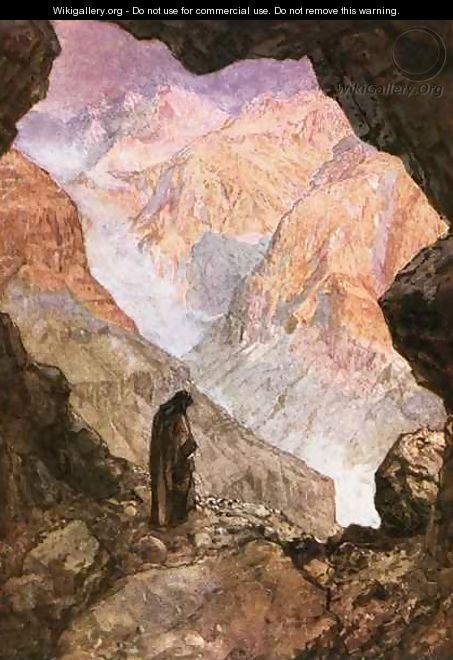
“Elijah gets scared and runs away to God” would be a more appropriate lesson title, but it’s just too long.
Let’s review what happened before. God had Elijah summon King Ahab and the false prophets of Baal and Asherah to Mount Carmel. First, a contest between Baal and the LORD was held where the LORD brought fire on the sacrifice prepared by Elijah and the false god Baal failed to bring fire to the sacrifice prepared by the false prophets. The people acclaimed the LORD as God. The false prophets were all seized at Elijah’s command and slaughtered. Elijah prophesied rain to Ahab then waited patiently for his servant to bring him word on when the first cloud appeared after sending his servant to look seven times. Then, in the Spirit of the LORD, Elijah ran ahead of Ahab and got to Jezreel before the deluge began.
In 1 Kings 19, the chapter starts with Ahab reporting everything that happened at Mount Carmel to Jezebel. Instead of Ahab and Jezebel repenting of their false worship and turning to the LORD because of the miracle of the sacrifice and the end of the drought, Jezebel gets angry and she sends a threat to Elijah, “May the gods deal with me, be it ever so severely, if by this time tomorrow I do not make your life like that of one of them.” (1 Kings 19:2)
Elijah, prophet of the living God, agent for God’s will in Israel, and beneficiary of God’s great power becomes afraid and runs away. We might be too quick to judge Elijah’s action here. After all, it’s much easier to say what Elijah should have done sitting safe in our armchairs than if we had to face the wrath of Queen Jezebel and her murderous intent ourselves. (Remember, she was already in the habit of killing the LORD’s prophets.)
Elijah gets out of town and heads to Beersheba. Once there, he left his servant and donkey behind and headed out further. He got out in the middle of nowhere and laid down under a broom bush and prayed, “I have had enough, Lord,” he said. “Take my life; I am no better than my ancestors.” (1 Kings 19:4) He had given up and wanted to die.
The LORD did not take his life. Instead, He sent an angel to minister to Elijah who had worn himself out worrying and running away. The angel feeds him twice with a nap in between. The angel also tells Elijah, “The journey is too much for you.” (1 Kings 19:7) This is an indication that he will only be able to continue the journey in the strength of the LORD and not under his own strength. The Bible says “Strengthened by that food, he traveled forty days and forty nights until he reached Horeb, the mountain of God. There he went into a cave and spent the night.” (1 Kings 19:8-9)
The next morning, Elijah comes face-to-face with God. “What are you doing here, Elijah?” (1 Kings 19:9)
Elijah responds with his complaint, “I have been very zealous for the LORD God Almighty. The Israelites have rejected your covenant, torn down your altars, and put your prophets to death with the sword. I am the only one left, and now they are trying to kill me too.” (1 Kings 19:10)
Elijah is having a crisis of faith. After the victory on Mount Carmel, and the people proclaimed the LORD as God, he might have expected that all the people, perhaps along with Ahab and Jezebel, would see the futility of following false gods and turn to the LORD. Instead, Jezebel is emboldened to continue her course despite the evidence. Her response shakes Elijah to his core.
Two thoughts here:
- How often we see that people who are shown the truth just pull themselves further and further into the pit of their belief in a falsehood.
Hans Christian Anderson’s story “The Emperor’s New Clothes” demonstrates this idea. In the tale, a king who spends more money on clothes than on the needs of his people gets fooled by two swindlers who contract with the King to make the finest set of clothes. These clothes will be so fine that only the most intelligent and capable people will be able to see the clothing. Just so the King, court officials, and finally the people won’t be thought inept or stupid, everyone pretends to see the clothes that are not there. It’s not until a boy shouts out, “The King has no clothes!” that everyone realizes they were duped. However, as the king has invested his pride into the falsehood, he continues to parade in his nakedness. (see the article at Wikipedia.org)
I live in a culture where, “The King has no clothes!” is a very appropriate response to many of the falsehoods which are perpetrated today.
- Elijah is discouraged after Jezebel threatens him – to the point that Elijah runs away. This is a very human response although it does highlight his lack of faith – but the LORD does not chide him. Instead, He asks the question, “What are you doing here, Elijah?” Remember, God knows everything. The Palmist says, “Before a word is on my tongue you, LORD, know it completely.” (Psalm 139:4) He knew precisely why Elijah had run away. But, as God is love, he allowed Elijah to voice his concern.
What God chooses to do next is amazing and gracious. He tells Elijah that He is going to “pass by.” We’ve seen this before in Exodus, after Moses and God have a conversation about God going with the Israelites through the desert and to the promised land, Moses asks God to “Now show me your glory.” (Exodus 33:18)
God acknowledges Moses’ request with conditions. First, God will cover Moses with his own hand as God passes by because it would be too much for Moses – it would literally kill him to be uncovered in the presence of God’s glory. So, God passes by Moses and declares himself. What an experience.
Now, Elijah will have the experience of God’s glory passing by him. Elijah stands at the mouth of the cave as wondrous things occur. First, a mighty wind comes that shatters rocks, but the LORD was not in the wind. Then a tremendous earthquake happens, but God was not in the earthquake. Then a blazing fire comes, but the LORD was not in the fire. Then God passes by in a whisper. At the whisper, Elijah covers his head and stands at the mouth of the cave in the presence of God. (1 Kings 19:11 – 13)
God repeats his question. He has just proven to Elijah that he can have faith in God. Frankly, I’m expecting some kind of response like Job, who when asked, “Where were you when I (God) did such and such” (Job 38 – 41) and Job does not offer up again the complaint he had uttered throughout the book of Job, “If only I could get before God he would see that I am righteous and that what happened to me was unjust!” (Job 23:2 – 7) Instead, Job responds with “Surely I spoke of things I did not understand, things too wonderful for me to know.” (Job 42:3)
Elijah takes a different approach. He repeats his initial complaint, “I have been very zealous for the LORD God Almighty. The Israelites have rejected your covenant, torn down your altars, and put your prophets to death with the sword. I am the only one left, and now they are trying to kill me too.” (1 Kings 19:14)
God does not punish Elijah for his continued complaining even after encountering the majesty and glory of God Most High. Instead, He gives him a set of instructions. “Go anoint a new king in Aram, anoint Jehu king of Israel (who will end up replacing Ahab), and anoint Elisha to be prophet after you.” (1 Kings 19:15 – 16) Then he tells Elijah, “Yet I reserve seven thousand in Israel—all whose knees have not bowed down to Baal and whose mouths have not kissed him.” (1 Kings 19:18)
God is telling Elijah, “You are not the only one left!” What an encouragement from God! That’s the only reason that line was put in the Bible – a remnant of faithful people never wavered and have always followed the LORD.
Elijah leaves the mountain and finds Elisha and they share his ministry until Elijah is finally called into heaven.
What lessons can we learn from this event from an End Time perspective?
- Those who encounter the truth about God may still choose not to follow Him (see Ahab and Jezebel).
- It is possible through your free will to maintain your fear even after encountering God (as Elijah did).
- God meets us where we are (he is not bothered by your complaints) and will give what we need so that we can be faithful to him (but we must choose to be faithful or not).
- God ALWAYS shows up at the right time (as he did at Mount Carmel and as He did for Elijah).
Lesson 23: Glory!

When Moses was on the mountain of God getting the Ten Commandments, the Law, and the design of the tabernacle, the nation of Israel was down below creating a golden calf, worshipping it instead of the LORD, and having a debauched party. Moses came down the mountain, breaks the tablets that the Ten Commandments were on, calls the Levites to rally to his cause, then goes through the camp striking down the apostate Israelites until they stop their debauchery.
God further sends a plague into the camp to punish the Israelites for their worship of a false god, and then has a conversation with Moses as recorded in Exodus 33.
Then the Lord said to Moses, “Leave this place, you and the people you brought up out of Egypt and go up to the land I promised on oath to Abraham, Isaac and Jacob, saying, ‘I will give it to your descendants.’ I will send an angel before you and drive out the Canaanites, Amorites, Hittites, Perizzites, Hivites and Jebusites. Go up to the land flowing with milk and honey. But I will not go with you, because you are a stiff-necked people, and I might destroy you on the way.” (Exodus 33:1 – 3)
Moses tells the people this and they are in distress. God is displeased with His people.
Later, Moses and God continue the conversation. Essentially, Moses tells God, “If your Presence doesn’t go with us, then don’t send us from here. How else would we have your favor, or the other nations know that we are Yours unless you go with us?” And God tells Moses that He will go with them.
Then Moses makes another request, “Now show me your glory.” And the LORD does, by putting Moses into a cleft of rock and covering Moses with His hand. The Glory of the LORD passes by Moses, and God declares His Name, “The LORD, the LORD, the compassionate and gracious God, slow to anger, abounding in love and faithfulness, maintaining love to thousands, and forgiving wickedness, rebellion and sin. Yet he does not leave the guilty unpunished.” (Exodus 34:6 – 7) And Moses bows down.
But who was Moses? Moses was a murderer. He had run away from Egypt because he had killed an Egyptian. Moses also asked God to get someone else to lead the people out of Egypt after he had run out of excuses.
_______________________
Elijah was running away from Jezebel. He had just been up Mount Carmel where God had won a contest by lighting a wet sacrifice which consumed the sacrifice, the wood, the 12 stones of the altar, the soil and all the water in a trench around the altar. The false god of the false prophets did not light their sacrifice. Elijah had the people seize the 850 false prophets and had them slaughtered.
Then, he announced to King Ahab that the drought was about to end which the LORD had declared through Elijah three years before.
A vengeful Jezebel, who had already killed many prophets of the LORD, sent him a message threatening his life. Elijah ends up on Mount Horeb and meets with God. “What are you doing here Elijah?” And Elijah says, “I have been very zealous for the Lord God Almighty. The Israelites have rejected your covenant, torn down your altars, and put your prophets to death with the sword. I am the only one left, and now they are trying to kill me too.” (1 Kings 19:9 – 10)
The Lord said, “Go out and stand on the mountain in the presence of the LORD, for the LORD is about to pass by.”
Then a great and powerful wind tore the mountains apart and shattered the rocks before the LORD, but the LORD was not in the wind. After the wind there was an earthquake, but the LORD was not in the earthquake. After the earthquake came a fire, but the LORD was not in the fire. And after the fire came a gentle whisper. When Elijah heard it, he pulled his cloak over his face and went out and stood at the mouth of the cave. (1 Kings 19:11 – 13)
But who was Elijah? Elijah had given up. He was so depressed that he had asked God to kill him because he had had enough of the people not turning to God even after the clear evidence that the LORD was the true God and Baal was just nothing. Even after the LORD passes by in his glory, Elijah gives the same complaint answer when God asks him again, “What are you doing here, Elijah?”
____________________
Jesus had just fed the five thousand by a miracle. Jesus had sent his disciples ahead in a boat while he dismissed the crowd. Then, he went up a mountain to pray.
“Later that night, the boat was in the middle of the lake, and he was alone on land. He saw the disciples straining at the oars because the wind was against them. Shortly before dawn he went out to them, walking on the lake. He was about to pass by them, but when they saw him walking on the lake, they thought he was a ghost. They cried out because they all saw him and were terrified.
Immediately he spoke to them and said, “Take courage! It is I. Don’t be afraid.” Then he climbed into the boat with them, and the wind died down. They were completely amazed, for they had not understood about the loaves; their hearts were hardened.” (Mark 6:47 – 52)
Did you catch it? “Jesus was going to ‘pass by.’” Just as the Glory of the LORD had passed by Moses and Elijah. The full glory of the LORD was on display in Jesus before the disciples.
And who were the disciples. These were the men that scattered when Jesus was arrested. Peter denied him three times. Judas betrayed him.
__________________________
The Bible records in Exodus 40 that when the Tabernacle was finally put together – “Then the cloud covered the tent of meeting, and the glory of the LORD filled the tabernacle. Moses could not enter the tent of meeting because the cloud had settled on it, and the glory of the LORD filled the tabernacle.” (Exodus 40:34 – 35)
When King Solomon built the temple in Jerusalem, the first permanent structure following the design of the tabernacle, the final act of finishing the temple was when the priests brought the Ark of the Covenant into the Holy of Holies beyond the inner curtain.
“When the priests withdrew from the Holy Place (meaning when they left the temple), the cloud filled the temple of the LORD. And the priests could not perform their service because of the cloud, for the glory of the LORD filled his temple.” (1 Kings 8:10-11)
And where is the temple of God today? The structure that was the temple was destroyed in AD 70 by the Romans. But now, “Don’t you know that you yourselves are God’s temple and that God’s Spirit dwells in your midst? If anyone destroys God’s temple, God will destroy that person; for God’s temple is sacred, and you together are that temple.” (1 Corinthians 3:16)
A holy God revealed His glory to people – those who had murdered, wanted nothing to do with His call, who had given up in the face of adversity, who denied him, abandoned him, betrayed him because of God’s great goodness and grace. And now, he allows Himself to indwell those who have repented and followed Jesus to inhabit His glory within themselves. (Acts 2:1 – 4)
So, let me encourage you. The Glory of God is within you if you have accepted Jesus as your savior. So, be a true temple of God filled with the Glory of God so that it exudes his Presence from your person in your words and deeds as you reach out to others who need to see the Glory of God on display.
The Psalmist said, “The heavens declare the glory of God.” (Psalm 19:1) So can you.
In the spirit of Independence Day which we just recently celebrated, let me leave you with this last thought by Julia Ward Howe:
“In the beauty of the lilies Christ was born across the sea,
With a glory in His bosom that transfigures you and me:
As He died to make men holy, let us live to make men free;
While God is marching on.”
Lesson 24 – Esther and God’s presence
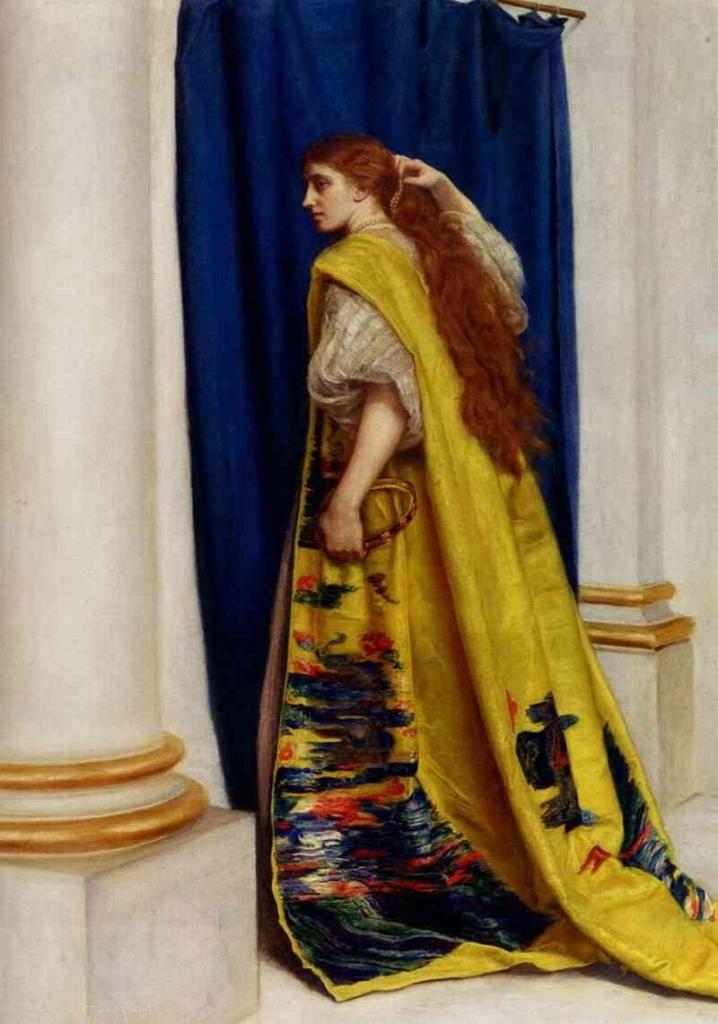
The Book of Esther tells the tale of five main characters. These characters are Xerxes, Mordecai, Esther, Haman, and God. I checked to see how many times each of these specific names get mentioned in the Book of Esther. The results are listed below:
Xerxes – 29 times (also referred to as “the king” but these references were not counted)
Mordecai – 56 times
Esther – 47 times (also mentioned as “Hadassah” once but this was not counted)
Haman – 49 times
God – zero times
God is not even mentioned and yet He’s one of the main characters in the Book of Esther. In fact, the author does not mention ”God,” “the LORD,” or even the word “pray” in the book of Esther. How is it, then that God is one of the main characters? Let’s look at the other characters and their roles in the story.
First, let’s understand more about King Xerxes and the context of the time of this story. Nebuchadnezzar, King of Babylon, conquered Jerusalem several times but finally destroyed Jerusalem and the Temple in 586 BC as punishment for King Zedekiah’s rebellion. Eventually, the Babylonian kingdom fell to Cyrus the Great of the Medo-Persian empire in 539 BC. When that occurred, some of the Jews were allowed to go back to Jerusalem (see the book of Ezra). The Persian kings are listed in the table below:
Cyrus the Great – ruled from 559 BC – 530 BC (defeated Babylon in 539 BC and absorbed Babylon as part of his overall kingdom)
Cambyses – ruled from 530 BC – 522 BC
Bariya – ruled from 522 BC – 522 BC (was assassinated by the Persian nobles)
Darius – ruled from 522 BC to 486 BC
Xerxes – ruled from 485 BC to 465 BC (this is the Xerxes of “300” fame of the Spartans who defeated his invasion plan of Greece at Thermopylae)
Next, Mordecai was a Jew who remained behind when the exiles returned to Judea. He was living in Susa, the capitol of the Persian Empire. He had a cousin named Hadassah (also known as Esther) whom he adopted and raised when her parents had died.
Haman who later became Xerxes’ top official is known as an “Agagite.”
We can understand his origin and animosity to the Jews by looking at his ancestors in previous instances in the Bible through a couple of stories. King Agag was king of the Amalekites during the time of King Saul of Israel. (See 1 Samuel 15). The Amalekites descended from Amalek who was a grandson of Esau (Genesis 36:12). Remember, that Esau and Jacob were brothers whose father was Isaac and whose grandfather was Abraham.
However, an interesting interaction took place during the time of the Exodus of the Israelites (the nation descended from Jacob also known as Israel) and the Amalekites (who descended from Amalek).
As Israel is moving through the desert to the mountain of God where they will later receive the law, the Amalekites came out against the Israelites and attacked them. A battle ensued and is described in Exodus 17.
In this story, Moses tells Joshua to fight against the Amalekites and that he will raise the staff in his hand as they battle. As Moses keeps the staff upraised, Joshua and the Israelites are winning against the Amalekites. However, when Moses gets tired and lowers the staff, the Amalekites are winning against the Israelites.
After a stone is brought to Moses so he can sit down and Aaron holds up one hand of Moses and Hur (Joshua’s father) holds up the other hand of Moses who is still holding the staff, Israel finally defeats the Amalekites.
“Then the LORD said to Moses, ‘Write this on a scroll as something to be remembered and make sure that Joshua hears it, because I will completely blot out the name of Amalek from under heaven.’ Moses built an altar and called it The LORD is my Banner. He said, ‘Because hands were lifted up against the throne of the LORD, the LORD will be at war against the Amalekites from generation to generation.’” (Exodus 17:14 – 16)
So, there would be enmity between Amalekites and Israelites for multiple generations. Again, King Saul and the Israelites were directed to wipe out the Amalekites in battle and destroy all their livestock. However, Saul disobeyed, and King Agag was left alive at the end of the battle. It was the prophet Samuel that later took a sword and killed Agag to uphold the LORD’s command.
As we get to the time of this story, the Amalekite and Israelite feud has continued as Haman decides to kill Mordecai because Mordecai showed public disrespect for Haman by not bowing to him. But, we must backtrack to the beginning of the story of Esther.
After the Babylonians are defeated by the Medo-Persians, Xerxes later becomes “King of Kings.” In the book of Esther, Queen Vashti defies the King’s command and has been put aside as unworthy of being queen. A new Queen is to be chosen and Esther has that honor after Mordecai, her cousin and surrogate father, encourages her to enter the contest and Esther becomes the new queen.
Later, Mordecai, as one of the exiled Jews, finds out about a plot against King Xerxes and reports it so that the murder plot is foiled, and the plotters are executed.
Afterward, Haman is elevated to become the King’s most trusted advisor. Haman is an Agagite – as such he was also an Amalekite who was a perpetual enemy of Israel (and God). Interestingly, it is when Mordecai does not bow to Haman as the highest advisor in the land to King Xerxes that Haman begins to plot against Mordecai and his entire race – the Israelites.
Why didn’t Mordecai bow? That answer is not given in the book of Esther, and we can only speculate. Instead, consider that Haman gets very angry with Mordecai. He seeks advice from his wife and from his friends who encourage Haman to build a structure in his backyard to have Mordecai executed.
Haman goes as far as convincing the king that “these people are not like us” and should therefore be killed. As Xerxes is convinced that Haman is acting in the best interest of the King, Xerxes agrees to let Haman “do what he wishes.”
With the king’s approval, Haman sends out letters under the King’s seal (because the king had given Haman his seal) that all the Jews are to be exterminated in every single province ruled by the King Xerxes on the 13th day of Adar which is at the end of the year.
What a terrible threat. Consider that if every Jew had been killed, this threat also impacted all future generations of these Jews including the Messiah who descended from some of the exiles. We’ve seen our own modern version of a genocidal threat against the Jews by the machinations of Nazi Germany in the last century.
Haman also looks forward to having Mordecai killed. However, God had other plans. One night, Xerxes the king cannot sleep – so he has someone read from the archives. One of the readings concerns the plot that Mordecai uncovered. When Xerxes asks, “What was done for Mordecai to reward him?” He is told, “Nothing.”
The next day, Xerxes seeks out his most trusted advisor. “How should I reward a man who does a great service for me?” Thinking that this is about himself, Haman says, “Have the man dressed in princely robes and riding a white horse and have someone lead the horse declaring, ‘This is what is done for the man the king favors!’” Xerxes follows the advice of his most trusted advisor, Haman, and has Haman perform this service and reward Mordecai. Galled, Haman had to dress Mordecai in princely robes, put him on a white horse and then lead the horse and make the declaration, “This is what is done for the man the king favors!”
Haman seeks more advice from his counselors and wife. “You can’t go against the man!” they now warn.
But Haman’s plot to kill all the Jews continues. In the meantime, Mordecai had already found out about the plot and approached Esther. He brought her news of the plot and tells her what to do, “Seek an audience with the king so that we can be rescued!”
Esther is afraid. Her predecessor defied the king. To approach the king without his permission could lead to her own death. She tells this to Mordecai. “Perhaps,” he replies, “you were raised to your position for this very reason – to save all of your people.” With refreshed courage, Esther approaches the king.
Xerxes could have let Esther be executed for approaching him as she was breaking the law since he had not sent for her. However, he not only extends the scepter towards her which means she is instantly forgiven, he also promises to grant any request she has up to half the kingdom. She tells the King that he and Haman should come to a banquet she is preparing that night. The king agrees.
At the banquet, Xerxes asks her again, “what is your request?” She asks that Haman and the king come to another banquet the following night and she would give the king her request. At that second banquet (after Haman had to lead Mordecai in honor through the streets) she asks the king to stop Haman’s plot of killing the Jews which would also mean her own death as she is also a Jew.
The king is so upset that he walks out of the hall. Haman knows he is doomed and pleads with Esther. The king comes back in and finds Haman in a very awkward physical position as if he were assaulting Esther. He has Haman taken out. Haman and his sons are killed. Haman is hung/impaled on the very gallows he had constructed. As the king could not undo the act of Haman, he sends out fresh letters to all the provinces to allow the Jews to kill those who seek to kill them. (He had recovered his seal from Haman.)
In the end, the Jews prevail. Esther and Mordecai are saved. And the last of the Amalekites, traditional enemies of Israel are destroyed.
The festival of Purim is established – the first festival after the time of Moses and the giving of the law – as God has rescued his people from destruction.
How then was God the main character of this story?
- He placed Esther in a position of influence with the king first by deposing Vashti and then by elevating Esther.
- He allowed Mordecai to overhear and report a conspiracy effectively saving the king’s life.
- He reminds the king of the deeds of Mordecai and has him honored by Haman during the midst of the plot.
- He reveals the plot to Mordecai who approaches Esther and alludes to the fact that she was probably raised up for this very purpose to save the Jews from Haman.
- He encourages Esther to approach the king in the face of death.
- He reveals to the king that Haman’s plot would kill the woman he reveres and that Haman is not to be trusted.
- He prompts the king to save the Jews.
God’s justice reigns in all the earth. What does any of this have to do with End Time Prophecy?
- God is still working to have His purposes fulfilled – just as he did in the events recorded in Esther.
- Evil people will have power to perpetrate evil plans against God’s people as Haman, most trusted advisor to Xerxes, did.
- God’s people will be involved in fulfilling God’s plans despite evil plans by evil people. As Mordecai told Esther, “If not you, then someone else will be raised up for the rescue of our people.”
- God’s people can always act with courage for the purposes of God. Perhaps not all will survive (as Esther could have when she approached the king counter to the law). But God honors those who honor Him.
- In the end, good will prevail and evil will be vanquished.
We may not all live on earth to see the day when Christ returns to finally vanquish the evil in this world and the perpetrators of it – but we know that day is coming. “And the glory of the LORD shall be revealed, and all flesh shall see it together: for the mouth of the LORD hath spoken it.” (Isaiah 40:5 KJV)
What is this site?
I created this site to discuss end time prophecy. Out of all the prophecies in the Bible, the end time prophecies are the ones that have yet to happen. Most of these were recorded in the book of Revelation; however, several other books in both the Old and New Testament speak about the end times.…
The Context of the Study
“Behold I stand at the door and knock. . . (Rev. 3:20) ” The Context or My Testimony When I was a boy of seven years, I went to my Mother and my Father and stated with certainty, “I want to be a Christian.” I had grown up in the church for as long as…
My Testimony
When I was seven, I became a Christian. The following Sunday, I was baptized. Life was perfect ever since. Wouldn’t that be nice? Of course, you know that life is not perfect and it hasn’t been for me either. I won’t bore you with everything that happened. I grew up in the church. I went…
Get new content delivered directly to your inbox.
 End Time Prophecy Study