Lesson 37: The Lessons of Ephesus

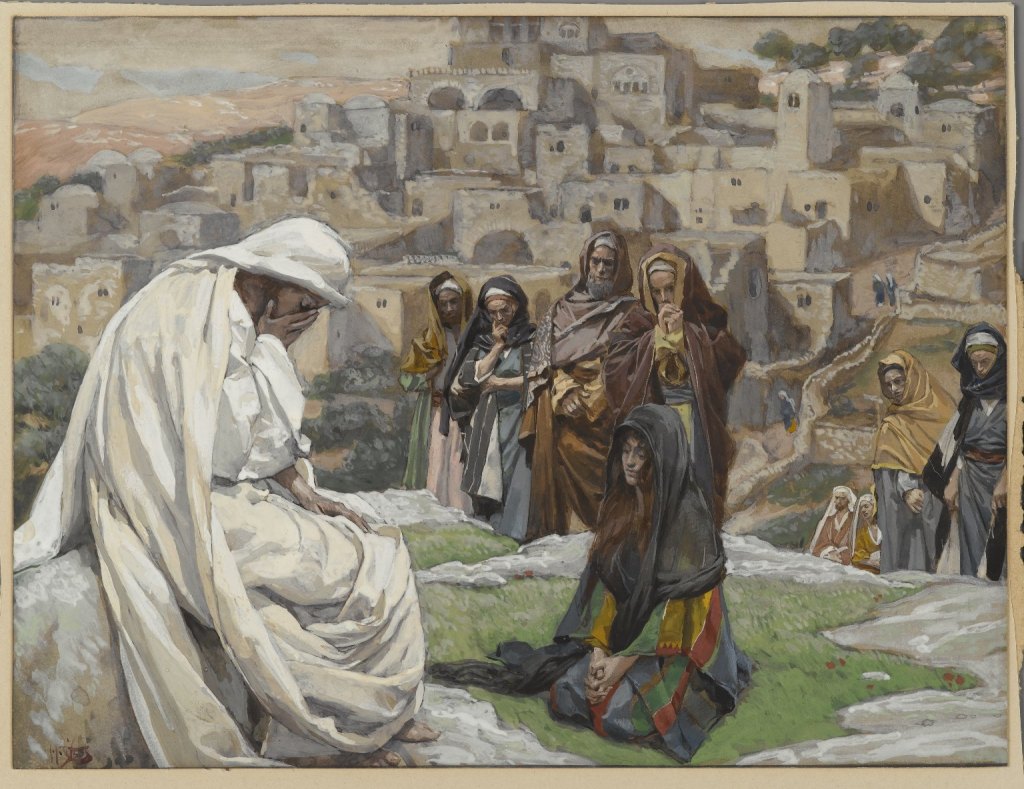
The original is located at the Manchester Art Gallery,
I had a great plan for how this would go. I have spent considerable time on the Tabernacle and Temple of God in our progression about the End Time Prophecy Study. I’m sure you could guess the next set of lessons that I had planned – about the destruction of the Temple in AD 70 with an aside into the Olivet Discourse which prophesied the Temple destruction. But, unlike Luke, who stated his gospel and Acts in a linear time format, we are going to jump ahead, as John often does in his gospel, and hit an important topic.
Dr. Jim Denison wrote an article that got me thinking. As a “Cultural Evangelist” he stated in a recent article that “many are so focused on eternity that they spend their lives preparing themselves and others for the next world to the exclusion of kingdom service in this world.” (denisonforum.org)
I think that he is right. And I think that attitude is typified by the the Ephesian church as described in the letter to the Ephesians recorded in Revelation 2. This idea merits consideration which warrants our break in the plan.
Here’s what the letter to the Ephesians states:
“To the angel[a] of the church in Ephesus write:
These are the words of him who holds the seven stars in his right hand and walks among the seven golden lampstands. I know your deeds, your hard work and your perseverance. I know that you cannot tolerate wicked people, that you have tested those who claim to be apostles but are not, and have found them false. You have persevered and have endured hardships for my name, and have not grown weary.
Yet I hold this against you: You have forsaken the love you had at first. Consider how far you have fallen! Repent and do the things you did at first. If you do not repent, I will come to you and remove your lampstandfrom its place. But you have this in your favor: You hate the practices of the Nicolaitans, which I also hate.
Whoever has ears, let them hear what the Spirit says to the churches. To the one who is victorious, I will give the right to eat from the tree of life, which is in the paradiseof God.” (Revelation 2:1 – 7 NIV)
We are going to consider the church in Ephesus in full at a later time. However, we need to examine this particular scripture verse, “Yet I hold this against you: You have forsaken the love you had at first.” (Revelation 2:4 NIV)
What can this possibly mean? I think of the time when Jesus was being questioned by Pharisees and the Sadducees, polar opposites in Jerusalem who were trying to find fault with Jesus. The Pharisees asked “Is it lawful to pay taxes to Caesar?” Of course they hated Caesar, but if Jesus had said, “No,” the Romans could arrest him. If he said, “Yes,” then he could be denounced for supporting the “oppressors” of Israel. Instead, Jesus asks for a coin and asks the crowd, “whose likeness is this?” And then says cryptically, “Render unto Caesar what is Caesar’s. But, render unto God what is God’s.”
Then, the Sadducees ask a complicated question about a woman who marries seven brothers, (one at a time, as fulfillment of the law – when the first dies, the second marries her to continue the first brother’s line, etc.). “At the resurrection, which of the brothers will be her husband?” Jesus corrects the fundamental error of their thinking. There is no marriage at the resurrection. In that respect, we will be like the angels. But then he says, “You are wrong thinking there is no resurrection. There will be a resurrection.”
Finally, one of the Pharisees asks the key question in all of the Old Testament law. “What is the greatest commandment?”
Every Jew today knows the Shema. “Shema Israel, Adonai elohaynu. Adonai echab.” Which is roughly translated as “Hear O Israel. The Lord is God. The Lord is One.” (Deuteronomy 6:6) But Jesus answers with the next verse recorded in Deuteronomy, “Love the Lord your God with all your heart, soul, mind and strength.”
Then Jesus says, “And love your neighbor as yourself. All the law and the prophets hang on these two commandments.”
Matthew moves on from this but Mark picks up the thread of the story. The questioner states that Jesus is right: loving God and loving the neighbor is more important than sacrifices and burnt offerings. Jesus replies, “You are not far from the kingdom of God.” (Mark 12:32 – 34 NIV)
But it’s Luke 10 that really takes this question to the next level. In that account, Jesus is asked, “What must I do to inherit eternal life?” and he asks the questioner, “What do you read in the law?” to which the teacher of the law responds, “Love the Lord your God with all your heart and with all your soul and with all your strength and with all your mind.” Jesus responds, “Do this and you will live.”
Then the teacher asks Jesus, “Who is my neighbor?”
Jesus answers this question with a parable. But, counter to the ideas that the Jewish elites held, the teacher of the law, the priests, the Pharisees are not the hero of the story. The hero is a Samaritan. To understand the signficance of Jesus choice of hero, we have to understand how the people of Samaria were thought of by the Jews.
Jeroboam rebelled against Rehoboam, son of Solomon, and effectively started a new kingdom of Israel with 10 of the tribes of Israel. Rehoboam was still king of Judah with the tribes of Judah and Benjamin. Jeroboam established his capital at Samaria. Later, because of the Israelites turning away from God, the Assyrians were allowed to conquer Israel and deported the ten tribes. In their place, the Assyrians brought in other peoples to inhabit the land. (This is why we speak of the ten tribes of Israel as the “lost tribes of Israel.”)
What happened was that a mixture of peoples became the Samaritans. They were considered “unclean” by the Jews. In fact, to travel from Jerusalem to Galilee, a Jew would cross the river Jordan to the East, travel north, and then travel back across the Jordan to the West just to avoid traveling through the Samaritans. The Jews considered them that lowly.
Now, in the parable of the Good Samaritan, a Jew traveling to Jericho, a short distance from Jerusalem, was beset by thieves who beat him, robbed him, and left him for dead. A priest and a Levite refuse to help the man (thinking him dead and not willing to check because it would have made them “unclean” if they touched a dead body). But the Samaritan took pity on the man, put him on his donkey, took him to an inn, paid the innkeeper to take care of the man, and promised extra payment if more cost was incurred as he came back through.
The lesson was clear – the Samaritan was the one who showed love.
To underscore the lesson here, let’s also consider another parable Jesus spoke of regarding the lambs and the goats. Remember how he separates them left and right. “He will put the sheep on the right and the goats on the left.” (Matthew 25:33)
Then Jesus passes judgment.
“‘Come, you who are blessed by my Father; take your inheritance, the kingdom prepared for you since the creation of the world. For I was hungry and you gave me something to eat, I was thirsty and you gave me something to drink, I was a stranger and you invited me in, I needed clothes and you clothed me, I was sick and you looked after me, I was in prison and you came to visit me.’
“Then the righteous will answer him, ‘Lord, when did we see you hungry and feed you, or thirsty and give you something to drink? When did we see you a stranger and invite you in, or needing clothes and clothe you? When did we see you sick or in prison and go to visit you?’
“The King will reply, ‘Truly I tell you, whatever you did for one of the least of these brothers and sisters of mine, you did for me.’
“Then he will say to those on his left, ‘Depart from me,you who are cursed, into the eternal fire prepared for the devil and his angels. For I was hungry and you gave me nothing to eat, I was thirsty and you gave me nothing to drink, I was a stranger and you did not invite me in, I needed clothes and you did not clothe me, I was sick and in prison and you did not look after me.’
“They also will answer, ‘Lord, when did we see you hungry or thirsty or a stranger or needing clothes or sick or in prison, and did not help you?’
“He will reply, ‘Truly I tell you, whatever you did not do for one of the least of these, you did not do for me.’
“Then they will go away to eternal punishment, but the righteous to eternal life.” (Matthew 25:34 – 46 NIV)
So, we should not lose our first love and that is the love of God borne out by love for our neighbor. A lost world is looking for our witness of a loving God that cares for them in the midst of their sin so that they can be redeemed to God. Jesus put it well, “By this they will know that you are my disciples, if you love one another.” (John 13:35 NIV)

Lesson 38: “The darkness has not understood it.”
“In the beginning was the Word and the Word was with God and the Word was God. He was with God in the beginning. Through him all things were made. Without him nothing was made that has been made. In him is life and that life is the light of all mankind. The light shines in the darkness and the darkness has not overcome it.” (John 1:1-5 NIV)
Son of Ishmael and member of Hamas,
I have stood where you now stand. I turned my back on God and sought something else to fill the void. I have felt that I have been betrayed by all that life could offer and sought my purpose in other pursuits.
Now, I ask you: are you fulfilled? Have you exalted in the destruction of your enemies? Did the momentary high that you experienced as your will was enacted when you killed and lorded over your enemy, and kidnapped and raped others, did it fulfill you?
The answer is, “No.”
It was all fleeting, wasn’t it? Your thirst for vengeance is not abated no matter how much blood you have spilled, or death and destruction you have wrought against your “enemies.”
So, you seek the next cycle when you can stand atop the bodies of your enemies and claim a homeland that you will eventually lose when you die.
And you wonder: is this it? Will I gain my virgins in the paradise of Allah to which I have pinned my hopes? Will I dwell in the Paradise that I was promised?
You know the truth, though you deny it, and obfuscate it, and shout “Inshallah!” And scream and work yourself into a frenzy.
But you know, “This is not all there is.” Because you are human and created by God with an innate knowledge that you NEED God to be complete.
I will tell you the truth that I had to learn twice. The Injeel speaks of the true savior, Jesus whom you know as Issa – He is the one you seek.
Greater than Mohammed, he died and rose again. In the tomb of Mohammed, Mohammad’s body is present but the grave of Jesus/Issa is empty. Contrary to what you believe, this Jesus died and was resurrected to never die again.
Son of Ishmael, member of Hamas, turn from your wicked way and seek the Jesus of the Injeel. He is reaching out to many of your brothers and sisters through dreams.
I am praying for you that you will not come to the end of your days and find that you have been deceived by Shaitan, the evil one, and find that your Allah was a myth and now you have denied the gift that Jesus/Issa had always offered to you: redemption to God through Jesus’ sacrifice on the cross for your sins and mine against God almighty.
Some of you will scoff. Your doom is assured. You will dwell in the outer darkness apart from God and you will gnash your teeth. You will lament, “If only we had paid heed to the truth!” Some will consider and still reject, confident in their assessment that they knew better to their chagrin when they realize that they were wrong.
And some, maybe one, will realize, “I have sinned against God! Wretch that I am! Who will save me from this sin of mine!?”
Only Jesus through his blood can save as he has saved so many that have come to recognize that His sacrifice for us was the only one that mattered.
Let me tell you, some or one, your life will get worse. Shaitan does not give you up easily! Will you persevere in your new found faith in Jesus Christ?
Here now the truth, “For God so love the world (YOU) that He gave His One and Only son, that whoever believes in him shall not perish but have eternal live.” (John 3:16 NIV)
I will pray for your soul and the souls of your families as I also pray for the victims and their families.
Only the God of all Heaven and help you now. Will you trust Him?
Lesson 39: How does God feel when you die?
This is not the most accurate title of the lesson. The most accurate title of this lesson is really, “How does God feel about people when THEY die?” But of course, most people are conceited and don’t really care about how God feels when they die but only about what happens to them when THEY die.
In the seventies, there was a book called, Life after Life. and it talked about the experience of people when they were clinically dead. I remember one account that basically said, “So, I’m dead now. God, I’m here. I’ve never believed in you but if you want me, here I am. At that moment, I was shot out of that space as quickly as possible, and I was alive again.”
I hate changes. I had something completely different that I wanted to talk about for this lesson. But, as usual, something more pressing came up and I must write this lesson instead. I was talking to an unsaved person, and I was getting quite angry. This person thinks they are right in every regard and know everything about everything.
Then, I was struck with this thought. “If this person died in the state they were in, how would God feel about that?” I know this person is unsaved. I know this person would endure an eternity without the presence of God. I know that is the worst fate that could be imaginable – no presence of God for ETERNITY.
Then, I thought of this idea. When Elijah wanted to die because Jezebel wanted to kill him, God told Elijah that 7,000 people in Israel had not bowed the knee to Baal. But that was a slim minority of all the people in Israel. I think that most people that ever existed are going to hell because they never acknowledged God as God.
What a terrible thought. that ANYONE should choose not to believe in God and be consigned to an ETERNITY without God (the weeping and gnashing of teeth) is more than I can fathom. It was better when I thought soul annihilation existed. At least then a person would not be cognizant for eternity that they had made the wrong decision. But now that I understand that one lives FOREVER either in the presence of God or NOT. I shudder to think what an eternity without God will be liked.
Which brings me to the key question. What does God think about unsaved people who die in their sins?
- First, Jesus is not surprised.
- Second, people who are consigned to eternity without God will have to admit that God gave them plenty of chances.
Even in Romans, all of creation is indicative of the existence of God but many turn away from Him. (Romans 1 and 2).
But this begs the question. I know God exists, so much that I have accepted Jesus as the savior of my life and I have repented of my sins. In fact, I’ve completely turned over my life to God so now I carry a responsibility of WITNESS.
In my last post, I have appealed to people that I don’t think are going to turn to God especially in the last lesson – like those who are members of Hamas who perpetrated acts against their fellow human beings (the Jews).
It reminds me of an article that came out in October of 2001 by a satirical entity called the Daily Onion. The chief article was how the nineteen individuals who had perpetrated the attacks on the passengers of four jet liners which crashed into the North and South towers of the World Trade Center, the Pentagon, and a field in Pennsylvania on September 11, 2001, had woken up from their “martyrdom” for Allah in hell.
They were all surprised that they were in hell. They had committed themselves to Allah and “dying for the cause” but woke up in hell anyway. Where were their 72 virgins? Where was heaven? What did it all mean?
Frankly, as soon as their souls woke up in Hades (the abode of the dead), I believe they knew exactly where they were and what punishment they were going to have to endure for ETERNITY. They weren’t surprised. They had made their choice and the God of the universe had meted out his justice to all who denied Him.
So, now I must warn you. When Jesus is described during his first Advent, Matthew 3:12 has a very interesting verse. “His winnowing fork is in his hand, and he will clear his threshing floor, gathering his wheat into the barn and burning up the chaff with unquenchable fire.”
I just noticed this verse in the first part of Matthew during his first Advent. He came to separate the “wheat” from the “chaff.” In his second Advent, he brings this separation to it’s ultimate fulfillment when He sits on his throne and tells many surprised people, “I NEVER KNEW YOU.”
My friend, if you have any question at all about your state of relationship with the Lord Jesus Christ, I ask that you humbly beseech Him with all your heart so that He will know you.
Otherwise, you will be in the place of darkness with the weeping and the gnashing of teeth. What makes Hell a hell? It is not the fire, or the pain, or even the weeping and gnashing of teeth. Instead, it will be the complete and utter absence of the presence of God in the place where those who denied God will dwell for all eternity.
The absence of God will make it the hell you deserve. Repent today and accept Jesus as your savior.
Get new content delivered directly to your inbox.
 End Time Prophecy Study