Lesson 43: Jesus prophecies of the End Time – the parable of the Ten Virgins

When I first considered writing about Jesus prophecies about the end times, I got a little stuck. In one respect, I wanted to cover the parable of the Ten Virgins. But in the consideration of the immensity of Jesus actual prophecy of the end times, I felt like it was more important to dig into the heart of everything Jesus had to say about the destruction of the temple, the coming of the antichrist, and Jesus return at the end of the age. To summarize, I was stuck.
I’m still going to do all of those things as I have spent an enormous amount of time considering the temple of God and the relation to history and the end times. However, after the last lesson that I posted about the ultimate destiny of most of humanity, I have decided to return to the parable of the Ten Virgins.
Im going to tell you something that I had never considered before. I don’t think that Jesus only told a parable about the end times by highlighting the actions of ten virgins related to the coming of the bridegroom which foreshadows His own second coming. I think that Jesus had ten specific young women in mind from His own life – five who would enter with Him into glory and five who would be shut out – that He knew as He lived His life before His crucifixion, resurrection and ascension.. I think He knew these ten and considered them from His human life when He related this parable. I think from His Divinity, He could foresee countless more of those who would enter glory with Him and countless others who would be shut out.
“Jerusalem, Jerusalem, you who kill the prophets and stone those sent to you, how often I have longed to gather your children together, as a hen gathers her chicks under her wings, and you were not willing.” (Matthew 23:37) This is what I think of when we examine this parable. . . the grief that He has for those specific people who will be shut out.
“At that time the kingdom of heaven will be like ten virgins who took their lamps and went out to meet the bridegroom. Five of them were foolish and five were wise. The foolish ones took their lamps but did not take any oil with them. The wise ones, however, took oil in jars along with their lamps. The bridegroom was a long time in coming, and they all became drowsy and fell asleep.
“At midnight the cry rang out: ‘Here’s the bridegroom! Come out to meet him!’
“Then all the virgins woke up and trimmed their lamps. The foolish ones said to the wise, ‘Give us some of your oil; our lamps are going out.’
“‘No,’ they replied, ‘there may not be enough for both us and you. Instead, go to those who sell oil and buy some for yourselves.’
“But while they were on their way to buy the oil, the bridegroom arrived. The virgins who were ready went in with him to the wedding banquet. And the door was shut.
“Later the others also came. ‘Lord, Lord,’ they said, ‘open the door for us!’
“But he replied, ‘Truly I tell you, I don’t know you.’
“Therefore keep watch, because you do not know the day or the hour.” (Matthew 25:1 – 13 NIV)
Like I said, I think Jesus knew specifically five young women who were wise and five who would be foolish when He returned.
Let us consider the five who were wise and what characteristics that apply to us.
- The wise did not know when the bridegroom would be coming. They only knew that He was coming. To prepare, they brought extra oil to trim their wicks and make sure they had light. (They believed in Jesus and did not lose faith.)
- They fell asleep while waiting so long for him to come.
- They had enough oil for themselves, and were ready for the bridegroom when He appeared so that they could go into the feast.
On the other hand,
- The foolish also did not know when the bridegroom would be coming. They also knew that He was coming. They were not prepared for his coming because they only brought the oil that was already in their lamps. (They did not believe in Jesus and had faith in themselves.)
- They fell asleep while waiting so long for him to come.
- They did not have enough oil for their lamps. They had to seek out the oil salesmen when the announcement of the bridegroom was coming to have light for their lamps. They were not ready for the arrival of the bridegroom.
- They were too late in getting their oil. The door was shut. When they knocked and cried to enter, the Bridegroom said, “I do not know you.” (And the door remained shut.)
I think Jesus knew the specific individuals who would believe in Him as the Messiah and accept the great sacrifice when He died on the cross so that they would be redeemed to God. I think He also knew the others who would deny that his sacrifice on the cross meant anything. They might know about it, but they would deny the gift and the redemption that it offered.
Jesus will come again in a second advent and bring about the great Day of the Lord. Those who are ready will be invited in. Those who are not ready, will be shut out – even thought they think they know the Lord, the worse pronouncement will be laid upon them.
“I do not know you.”
May Jesus know you – it is your only hope.
Lesson 44: The Important Question
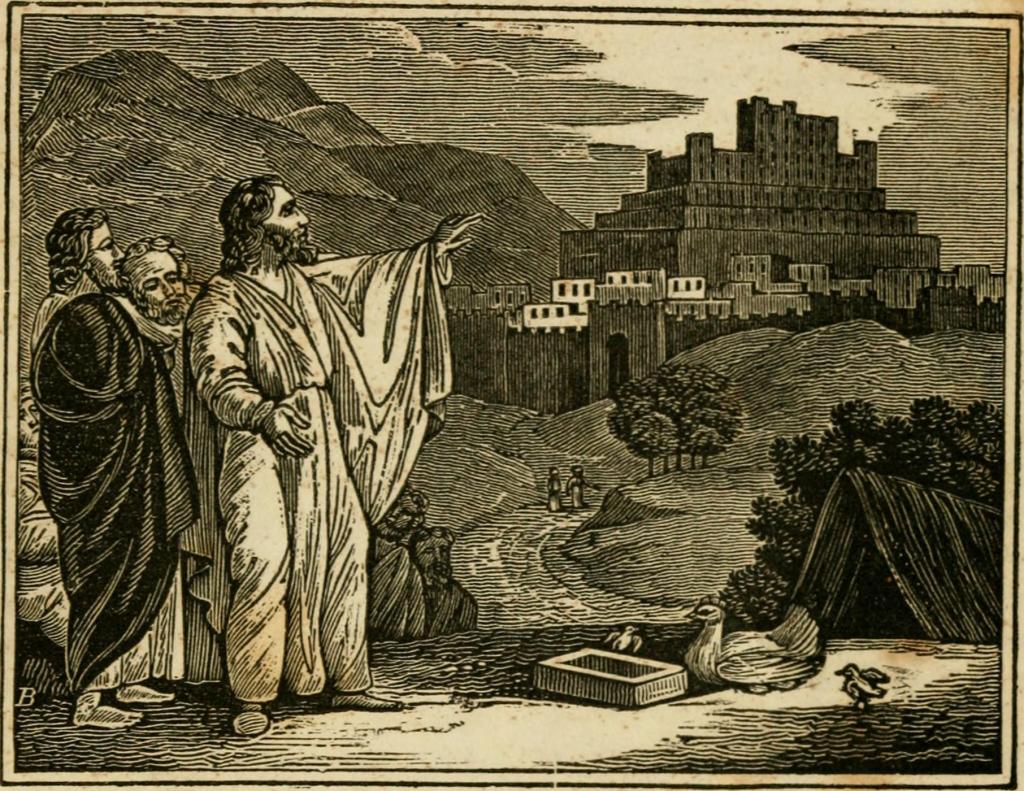
Before we go further, I recommend that you read the three gospel accounts of the Olivet Discourse of Jesus Christ. These are in Mark 13, Luke 21, and Matthew 24 and 25. Both Mark and Matthew have very similar accounts although Matthew provides more comparison via parables to help the disciples understand what he is stressing. Luke provides a slightly different account such as “votive gifts” besides the buildings and stones which are mentioned also in Mark and Matthew’s account. One shouldn’t be concerned about the differences. If four people are having a conversation, the four of them may have slightly different accounts about what was included in the conversation.
As reported in an earlier lesson, Jesus and the disciples are leaving the temple precincts, and the disciples start marveling at the structure of the temple and the surrounding buildings. Jesus makes his own comment, “You see these buildings and these stones? Not one stone will be left on another that hasn’t been torn down.”
What Jesus prophesied about the destruction of the temple is echoed in the discussion that He has with the Samaritan woman at the well in John 4. There, the woman says, “’Sir, I perceive that You are a prophet. Our fathers worshiped in this mountain, and you people say that in Jerusalem is the place where men ought to worship.’ Jesus said to her, ‘Woman, believe Me, an hour is coming when neither in this mountain nor in Jerusalem will you worship the Father.’” (John 4:19-21 NIV)
When Jesus said that the temple was to be destroyed, this caused the disciples to want to know more. So, on the Mount of Olives, they ask Jesus for “when will this happen?” In Mark and in Luke, what is added is “what will be the signs” of “when this will happen.” In Matthew, the question is expanded to “when will these things happen” and “what will be the sign of Your coming and the end of the age?”
Here’s the one thing I want you to remember about this discourse in case you forget the rest. The first thing that Jesus says to the disciples is “don’t let anyone mislead you about my coming” because false Christs and false prophets are going to claim to be Jesus.
Why would people be misled? Because people still need a savior. And Satan would love to provide a substitute which is a false savior. There’s a reason why Peter writes, “Be alert and of sober mind. Your enemy the devil prowls around like a roaring lion looking for someone to devour.” (1 Peter 5:8 NIV) What better way than to have a false savior lead a person into the lion’s den?
So let’s consider the question that the disciples ask Jesus after hearing that the Temple will be destroyed. We’ll examine the text from all three gospels that address this.
“As Jesus was sitting on the Mount of Olives, the disciples came to him privately. ‘Tell us,’ they said, ‘when will this happen, and what will be the sign of your coming and of the end of the age?'” (Matthew 24:3 NIV)
“’Tell us, when will these things happen? And what will be the sign that they are all about to be fulfilled?’” (Mark 13:4 NIV)
“’Teacher,’ they asked, ‘when will these things happen? And what will be the sign that they are about to take place?'” (Luke 21:7 NIV)
All three of these accounts are dependent on what the disciples understood of who Jesus is. Also, it’s also important to realize from our perspective that this discussion happens the last week of Jesus life before He is crucified. After this discussion will come the Passion of the Christ, the crucifixion, and the resurrection.
The disciples have spent about three years with Jesus. In all that time, they have come to recognize that Jesus is from God as He has preached about the coming Kingdom of God, performed miracles in the name of God, claimed to be the “Son of the Living God,” and stood up to the false religious leaders of the day who have not truly followed God (such as the Pharisees and Sadducees (and the Herodians)).
Some (Peter, James and John) have seen him bring people back to life (such as Jairus’ daughter) and also have seen Him transfigured and speaking to Moses and Elijah.
Matthew’s account is more closely aligned with the idea of Jesus coming again. His gospel is all about how Jesus is the fulfillment of the prophecies of the Messiah from the Old Testament. Mark’s account, as one of the earliest Gospel accounts probably from Peter’s testimony, seems to carry the weight of the coming Kingdom of God. Luke’s account, as related by Mary and Paul’s studies also seems to point to Jesus as a truthful teller of the future.
This is the most relevant question about the future that the disciples will ask before the crucifixion.
To some extent, we have the answer to the question “when will this happen” (the destruction of the Temple) as it occurred when the Romans overthrew Jerusalem and destroyed the Temple in AD 70.
However, the second part of the question is not yet answered. “And what will be the sign of your coming and of the end of the age?” That question is still to be answered. This is a question which is still asked by today’s disciples.
We will discuss Jesus answers in the next lesson.
Lesson 45: Jesus is The Answer
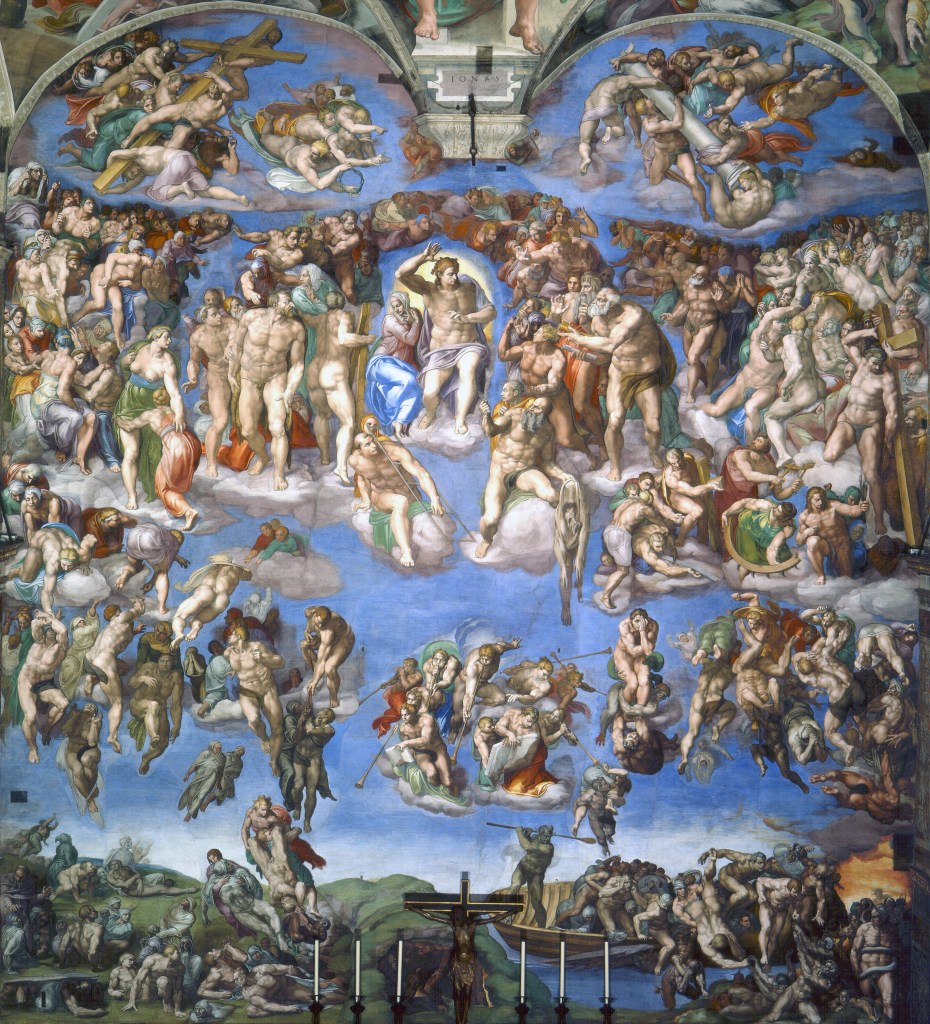
In the last lesson, the disciples ask Jesus concerning his statement of the destruction of the temple and the “sign of your coming and the end of the age?” (Matthew 24:3 NIV) In this lesson we will attempt to begin the answer that Jesus gives.
First, he commands his disciples not to be deceived by false Messiahs (none of whom will be Jesus even if they claim to be). It is important that we understand that we should remember Jesus own claim – “I am the way and the truth and the life. No one comes to the Father except through me.” (John 14:6 NIV)
There is an idea that there are “many paths to God.” The universalist, Robert Short, in his book, The Parables of Peanuts, states later in the book of his belief that God will bring everyone to heaven. Many people around the world who have a concept of heaven think that their actions in their religion, whether Buddhist, Muslim, Jewish, New Age or pseudo-Christian believe that they will get to heaven or Oneness because they followed the tenets of their religion or provided “good works” that weigh out the “bad works” they have done in their lives.
That idea is unbiblical.
Instead, the Bible clearly states that none of the works that we do in our life will ever redeem us to God. It is only through the saving grace of the work of the sinless God-man, Jesus, who sacrificed his life on the cross and then was resurrected from the dead that provides the justification that any of us could hope to have. What is our responsibility in the face of this truth?
We are to accept “the message concerning faith that we proclaim: If you declare with your mouth, ‘Jesus is Lord,’ and believe in your heart that God raised him from the dead, you will be saved. For it is with your heart that you believe and are justified, and it is with your mouth that you profess your faith and are saved. As Scripture says, ‘Anyone who believes in him will never be put to shame.'” (Romans 10:8b – 10 NIV)
No other way leads to redemption by God or eternal life in Him.
So what do we know at this point in the Scripture? Jesus is talking to His disciples who believe in Him. The arrest, trial, torture, and death have not yet come. Nor has the resurrection yet happened. But Jesus gives this prophecy: “Let no one deceive you.”
Next, he speaks of things that will happen on the earth. “You will hear of wars and rumors of wars, but see to it you are not alarmed. Such things must happen, but the end is still to come.” (Matthew 24:6 NIV)
In the western world, two wars that come to mind (since I started this website) was the invasion of Russian into Ukraine in 2022 and the ongoing war and the attack by Hamas against Israel two years ago and Israel’s war against Hamas in Gaza. According to the Geneva Academy (geneva-academy.ch) “45 armed conflicts are currently taking place throughout the Middle East and North Africa.” Wikipedia has a list of ongoing conflicts which include “Major wars – (10,000 or more deaths), Minor wars – (1,000 to 9,999 deaths), Conflicts (100 to 999 deaths) and Skirmishes (1 – 99 deaths).” Isn’t it interesting that Conflicts can be classified by the number of deaths inflicted because of war?
And yet, “the end is still to come.” One of the benefits of the return of Jesus Christ will be “He makes wars cease to the ends of the earth. He breaks the bow and shatters the spear; he burns the shields with fire. (Psalm 46:9 NIV)
But we also have this hope until He returns, “He says, ‘Be still, and know that I am God; I will be exalted among the nations, I will be exalted in the earth.'” (Psalm 46:10 NIV)
Come, Lord Jesus.
Until He does, the lessons will continue.
Get new content delivered directly to your inbox.
 End Time Prophecy Study